From Perception
To Intelligence.
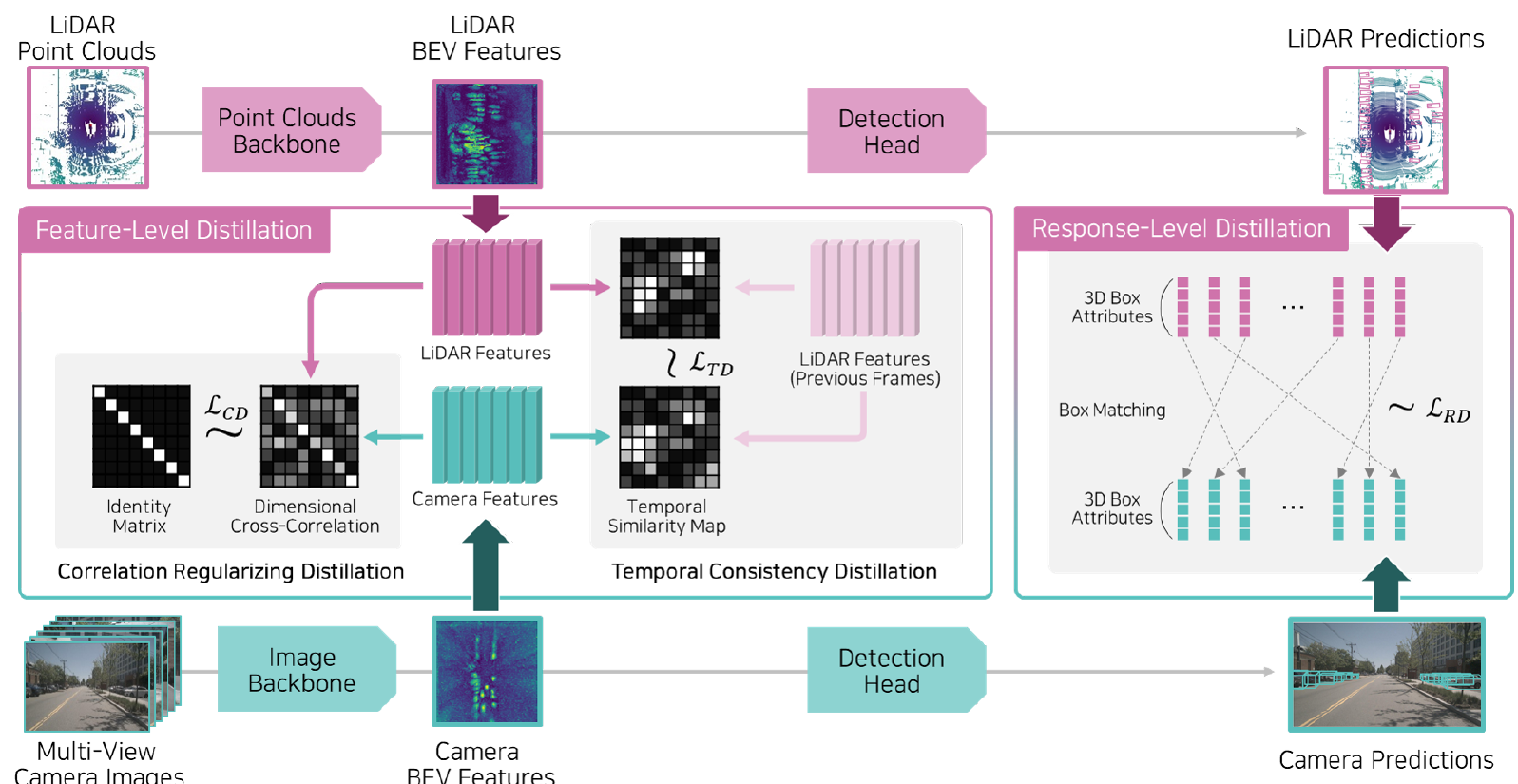
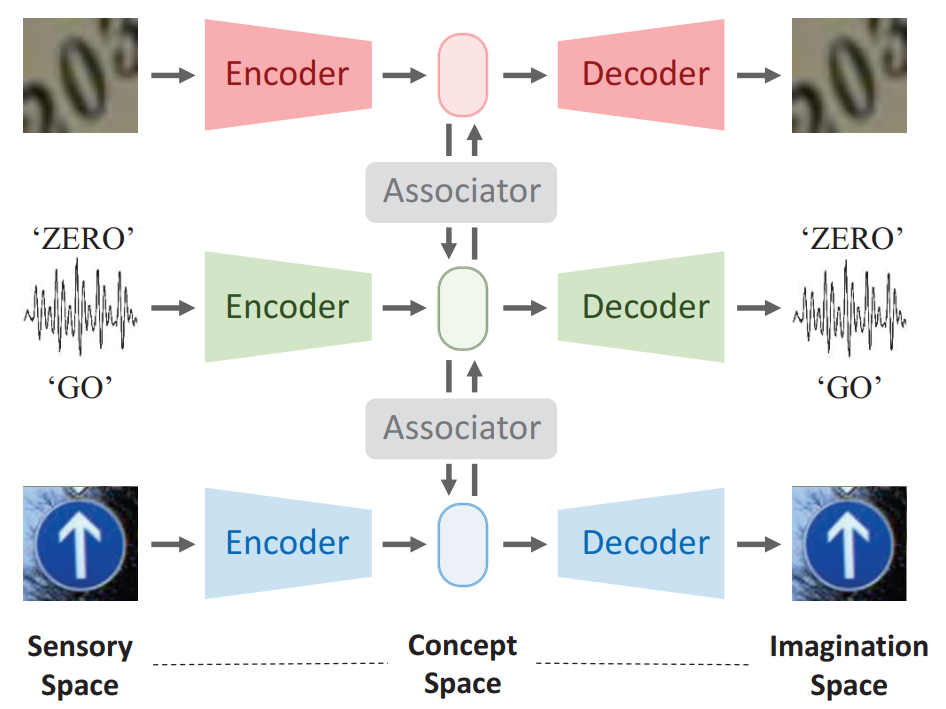
The Perception and Intelligence Laboratory (KNU-PIL) in the School of Electronics Engineering at Kyungpook National University studies how AI systems perceive the real world and turn sensory information into intelligence that is reliable and generalizes. Our goal is to understand why AI systems succeed or fail in real-world scenarios, and to design learning methods that stay reliable under realistic conditions, bridging perception and intelligence for practical AI applications.
Our research broadly covers
- Perception & Representation: learning representations that capture the structure of environments.
- Learning from Multimodal and Imperfect Inputs: learning from multiple modalities such as image and text, and from heterogeneous, incomplete, or noisy data.
- Robust and Reliable Decision-Making: making predictions and decisions that stay dependable under distribution shift, uncertainty, and practical constraints.
- Data-Efficient Machine Learning: methods that learn effectively when labels, data, or compute are limited.
News
- 2026.10 KNU-PIL, together with Prof. Sangmoon Lee’s lab, has been selected for the Hyper-Connected Top Scientist Lab program of the KNU Glocal University 30 Project (2026학년도 글로컬대학사업 초연결 최고과학자 연구실).
- 2026.10 The KNU-PIL website has been renewed.
- 2026.09 Prof. Jo has been recognized as a Top Reviewer at NeurIPS 2026.
- 2026.09 Two papers have been accepted to NeurIPS 2026: Codebook-Guided Cross-Modal Knowledge Distillation for Structurally Heterogeneous Features and FinAl: Fine-grained Alignment for Detail-Preserving Medical Vision-Language Pretraining.
- 2026.06 Our project ‘멀티모달 AI를 위한 이질적 특징 간 지식전파 연구’ has been selected for the KNU More Action Stepping-Stone Grant (KNU 기초연구지원사업 ‘More Action 개인 디딤돌 사업’).
- 2026.04 Our paper Cross-Modal Feature Distillation via Sample-Aware Adaptive Masking has been published in IEEE Access.
- 2026.03 Welcome Insu Kang and Sanghyuck Nam to KNU-PIL as undergraduate researchers.
- 2026.03 Prof. Jo has joined the SW-Centered University Program (SW 중심대학사업) and the AI Convergence and Open Sharing System (AICOSS) (첨단분야 혁신융합대학사업, 인공지능) as participating faculty.
- 2025.12 Prof. Jo gave a seminar on Representation Learning for Multimodal Data Bridging Inter-Modality Gaps at ETRI.
- 2025.10 Our paper Multi-Agent Visual Reasoning for Out-of-Distribution Detection in Complex Road Environments has been published in IEEE Access.
- 2025.09 Prof. Jo has joined the Glocal AI Research Unit of the KNU Advanced Technology Convergence Research Institute (글로컬대학30 첨단기술융합연구원 AI 연구유닛).
- 2025.09 Prof. Jo contributed an online lecture, Causality-Inspired Representation Learning for Domain Generalization, to the graduate course Deep Learning and Domain Adaptation for Medical Diagnosis at Dankook University (Fall 2025).
- 2025.07 Prof. Jo gave an invited seminar on Deep Learning with Multimodal Data at Chung-Ang University.
- 2025.07 Prof. Jo gave a lecture on Deep Learning with Multimodal Data at the 4th CO-Week Academy.
- 2025.05 Prof. Jo gave a talk, In the Era of the AI Tools, at the BK Lunch Seminar, Kyungpook National University.
- 2025.05 Three papers have been accepted to IEEE AVSS 2025: Distributional Uncertainty for Out-of-Distribution Detection, CoT-Segmenter: Enhancing OOD Detection in Dense Road Scenes via Chain-of-Thought Reasoning, and Active Learning for Finely-Categorized Image-Text Retrieval by Selecting Hard Negative Unpaired Samples.
- 2025.04 Our paper Generating Visual-adaptive Audio Representation for Audio Recognition has been published in Pattern Recognition Letters.
- 2025.03 Prof. Dae Ung Jo has joined the School of Electronics Engineering at Kyungpook National University, and the KNU-PIL website is now open.
Selected Publications
Full list →- NeurIPS
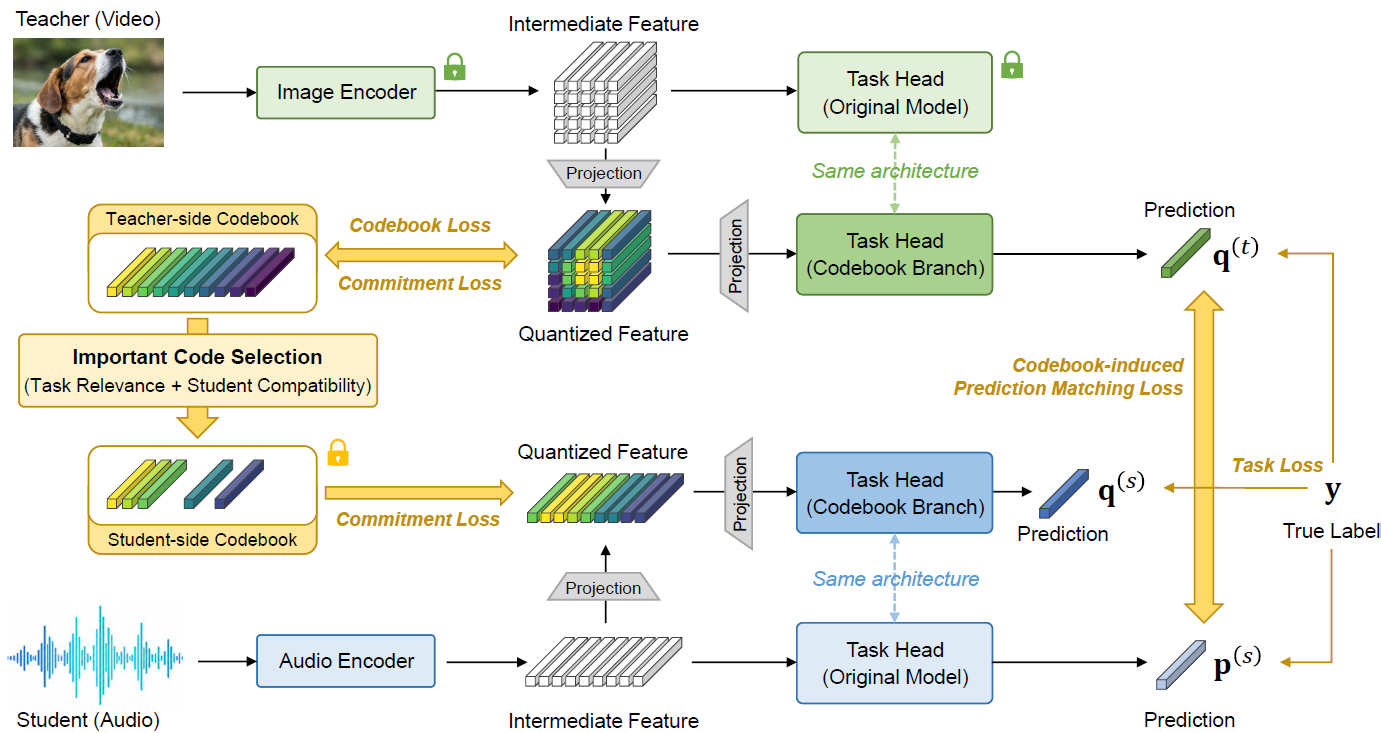 ConferenceCodebook-Guided Cross-Modal Knowledge Distillation for Structurally Heterogeneous FeaturesIn Conference on Neural Information Processing Systems (NeurIPS), 2026
 - NeurIPS
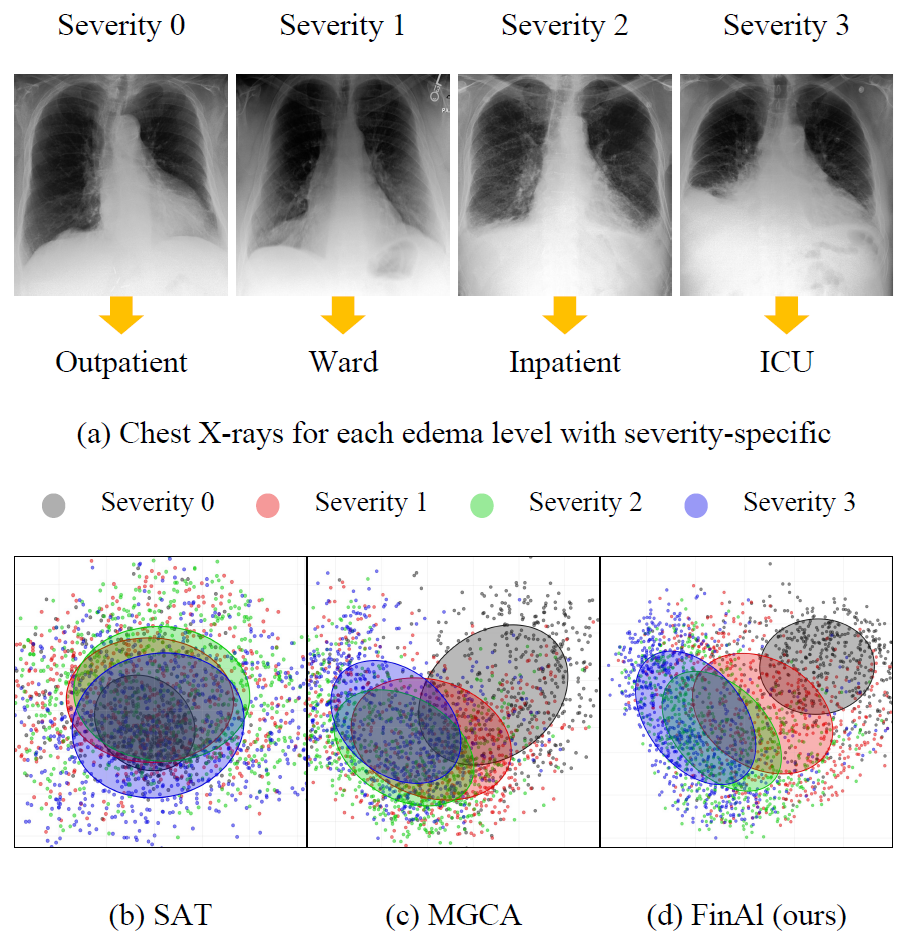 ConferenceFinAl: Fine-grained Alignment for Detail-Preserving Medical Vision-Language PretrainingIn Conference on Neural Information Processing Systems (NeurIPS), 2026